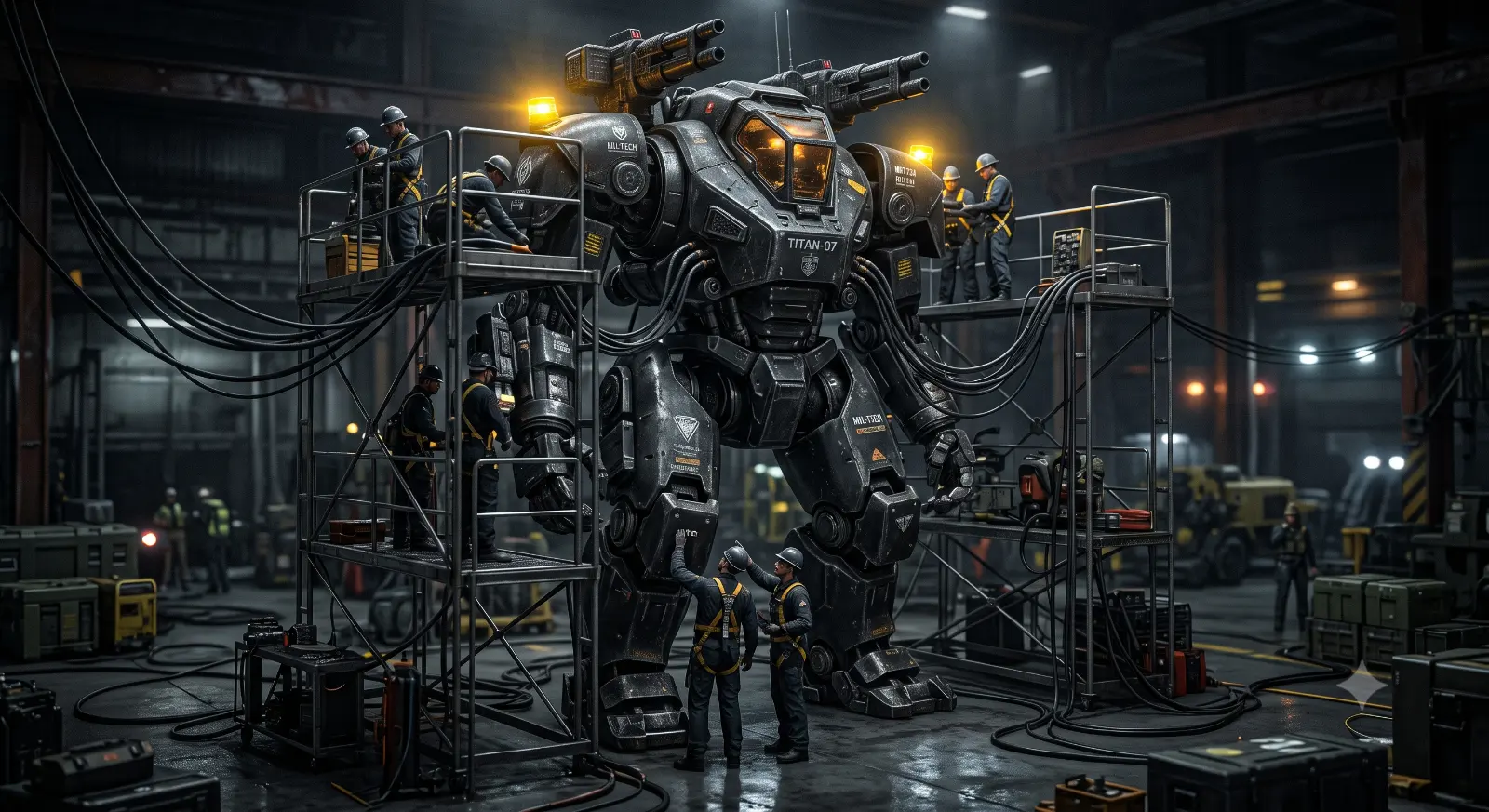
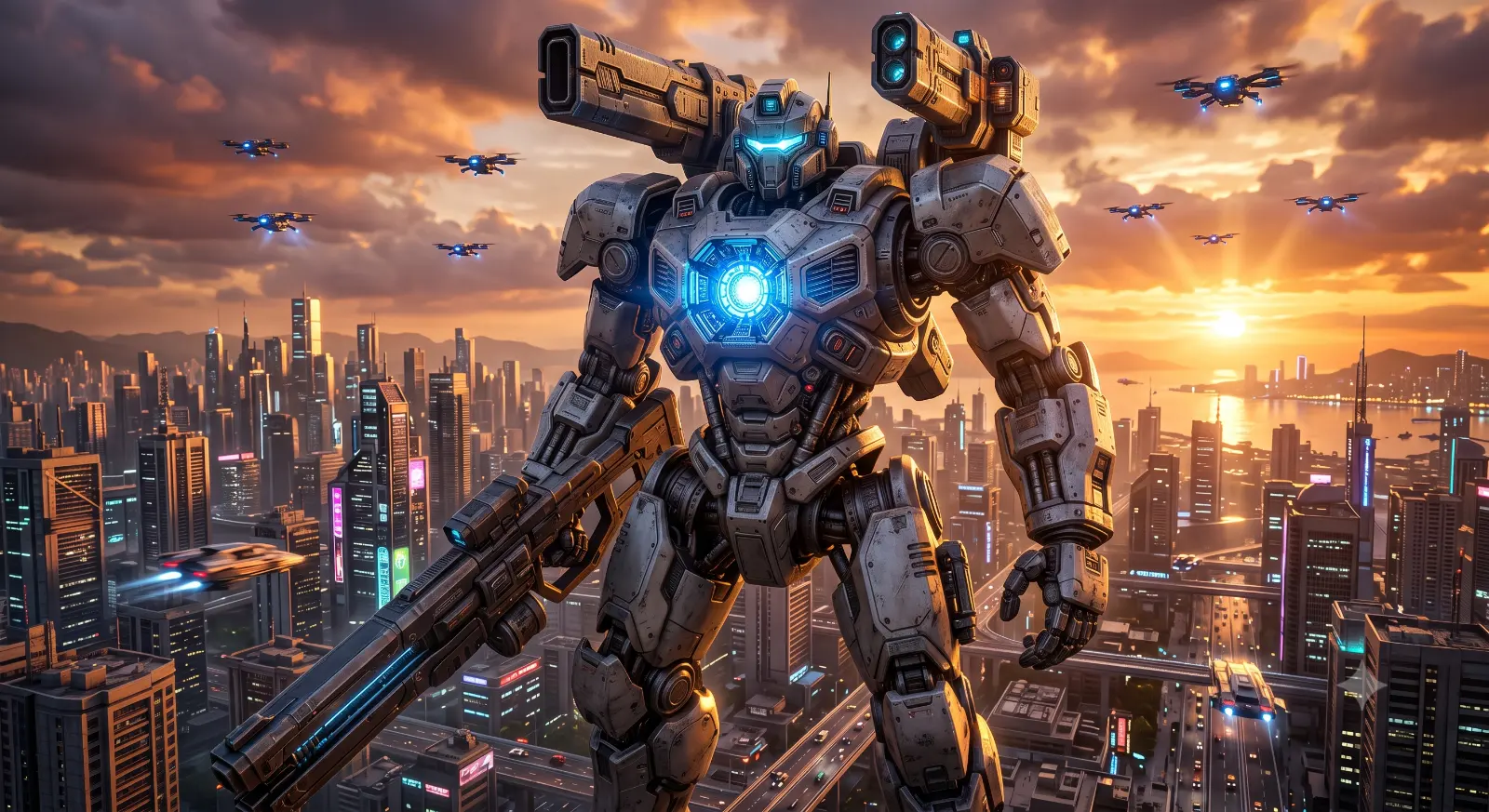
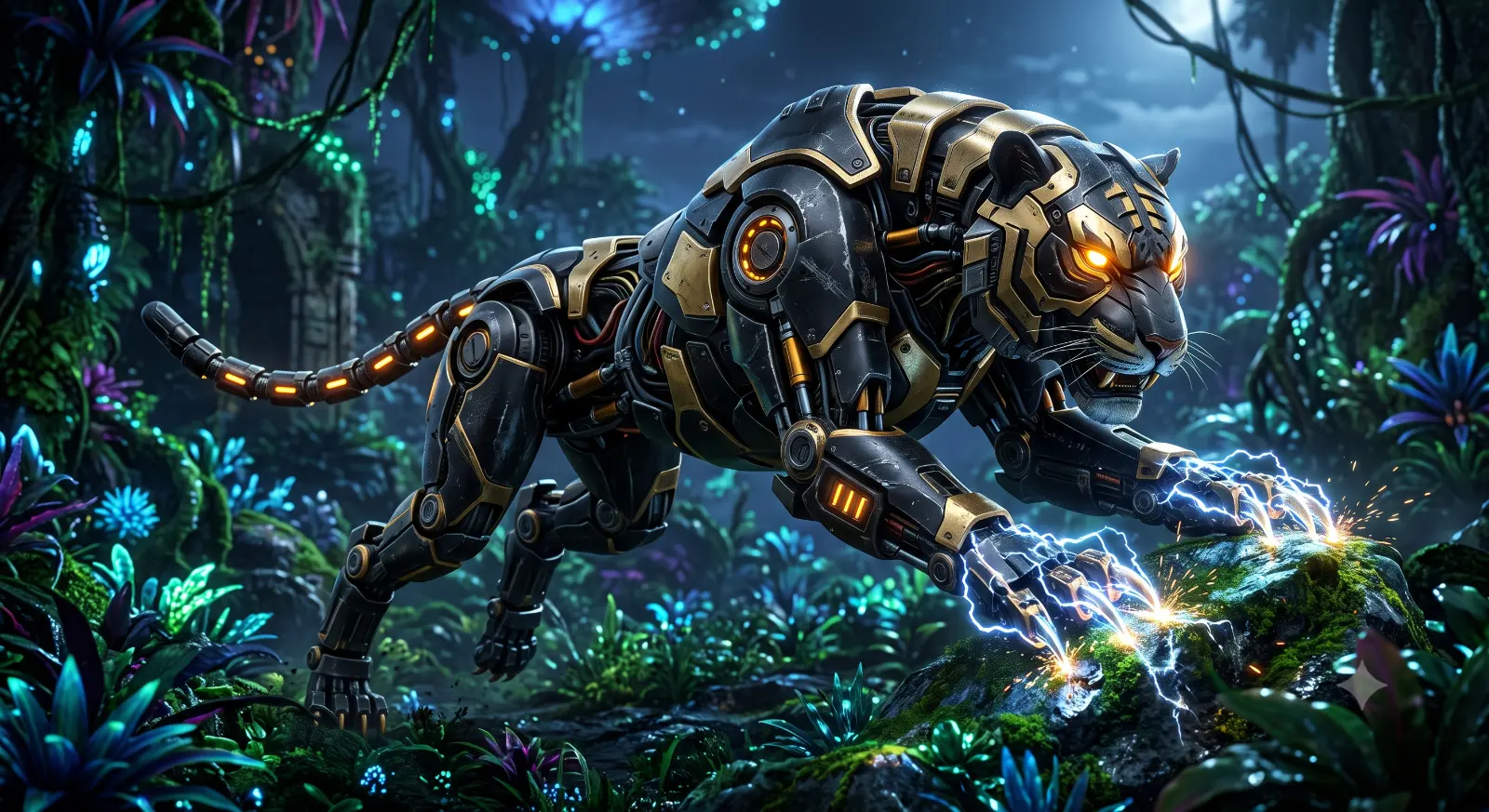
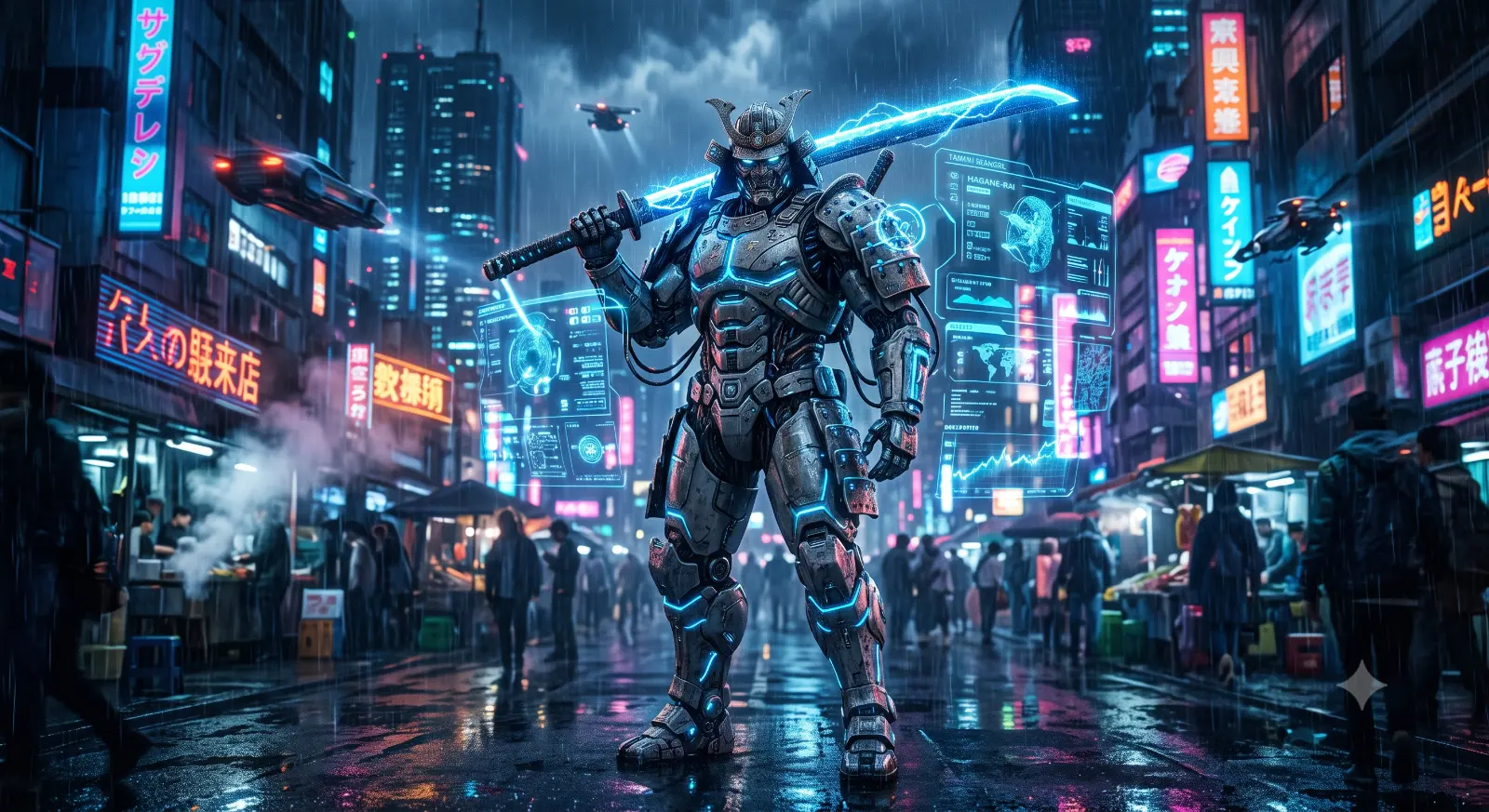
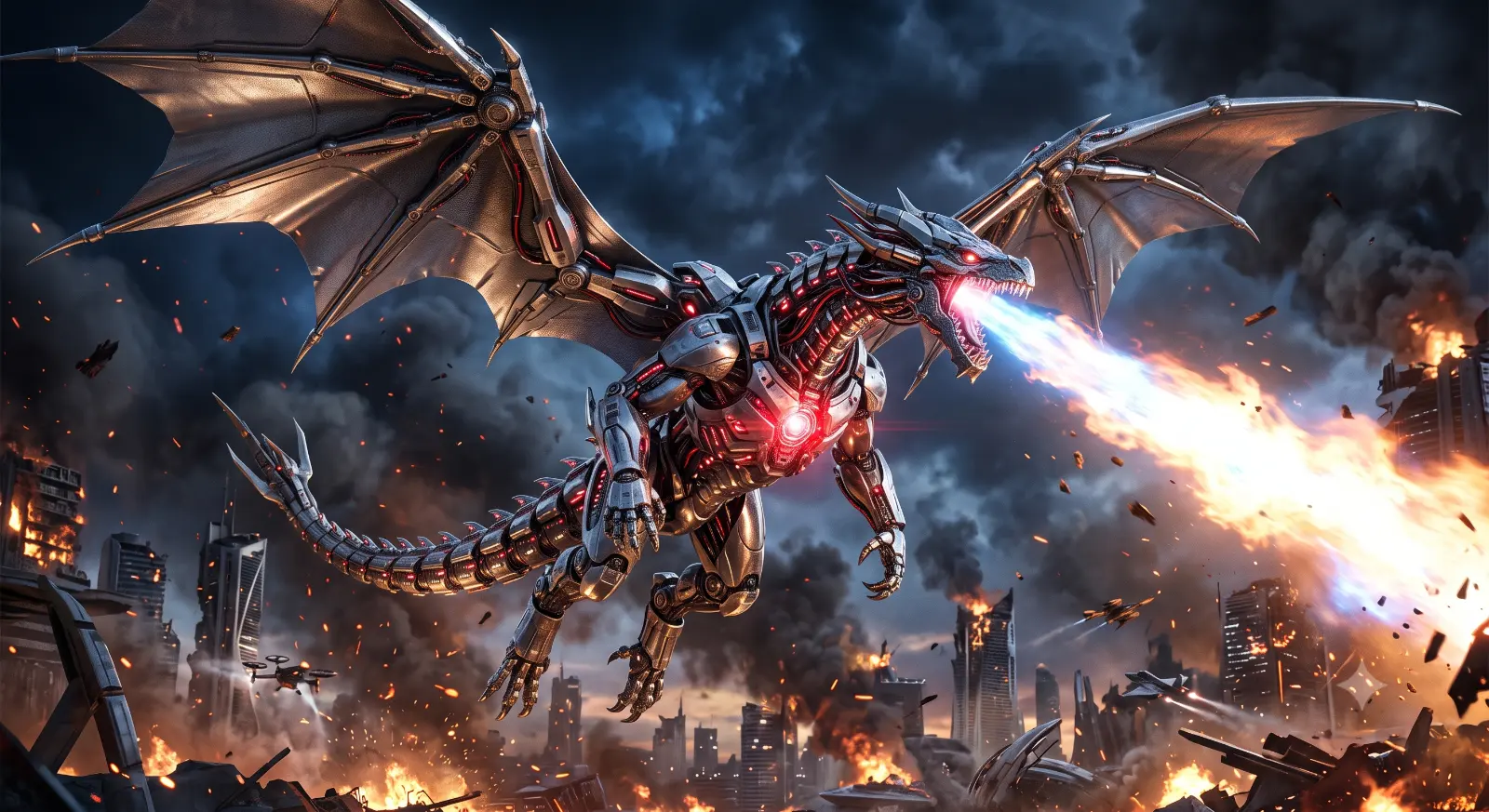
Mecha prompts in this collection span tactical military hardware to anime-style warrior suits: a Tactical Armored Mech in a cavernous hangar bay with hydraulic servicing arms and technician figures for scale, a Mecha Dragon fusing organic draconic biology with mechanical components, a Mecha Samurai with layered folded-steel plate armour and glowing energy katanas, and a Mecha Guardian Titan towering above a city skyline in dramatic backlighting. Scale and engineering detail are the defining visual qualities.
Mecha design communicates through three interlocking elements: panel geometry, energy system visualisation, and scale. Panel geometry—"asymmetric angular shoulder pylons", "stacked layered torso plates with recessed joints", "articulated knee actuator with piston detail"—defines the mechanical character. Energy systems give the mech life: "glowing blue energy conduit lines along the spine", "plasma exhaust vents on the calves venting teal light". Scale is established by relationship: a hangar with human technicians, a city skyline, or an aircraft carrier docked beside the mech's ankle.
Adapt these prompts by deciding the design school first—Japanese super-robot (chunky, expressive, colour-coded), Western military (angular, camouflage, functional), or organic-hybrid (partially biological, fused rather than bolted). Then swap the armament. For dramatic single-mech hero shots, use a low upward camera angle and a sky-heavy background to maximise the sense of towering scale. Both Gemini and Midjourney handle hard-surface mechanical design well; Midjourney's default stylisation often adds desirable cinematic quality without extra prompting.