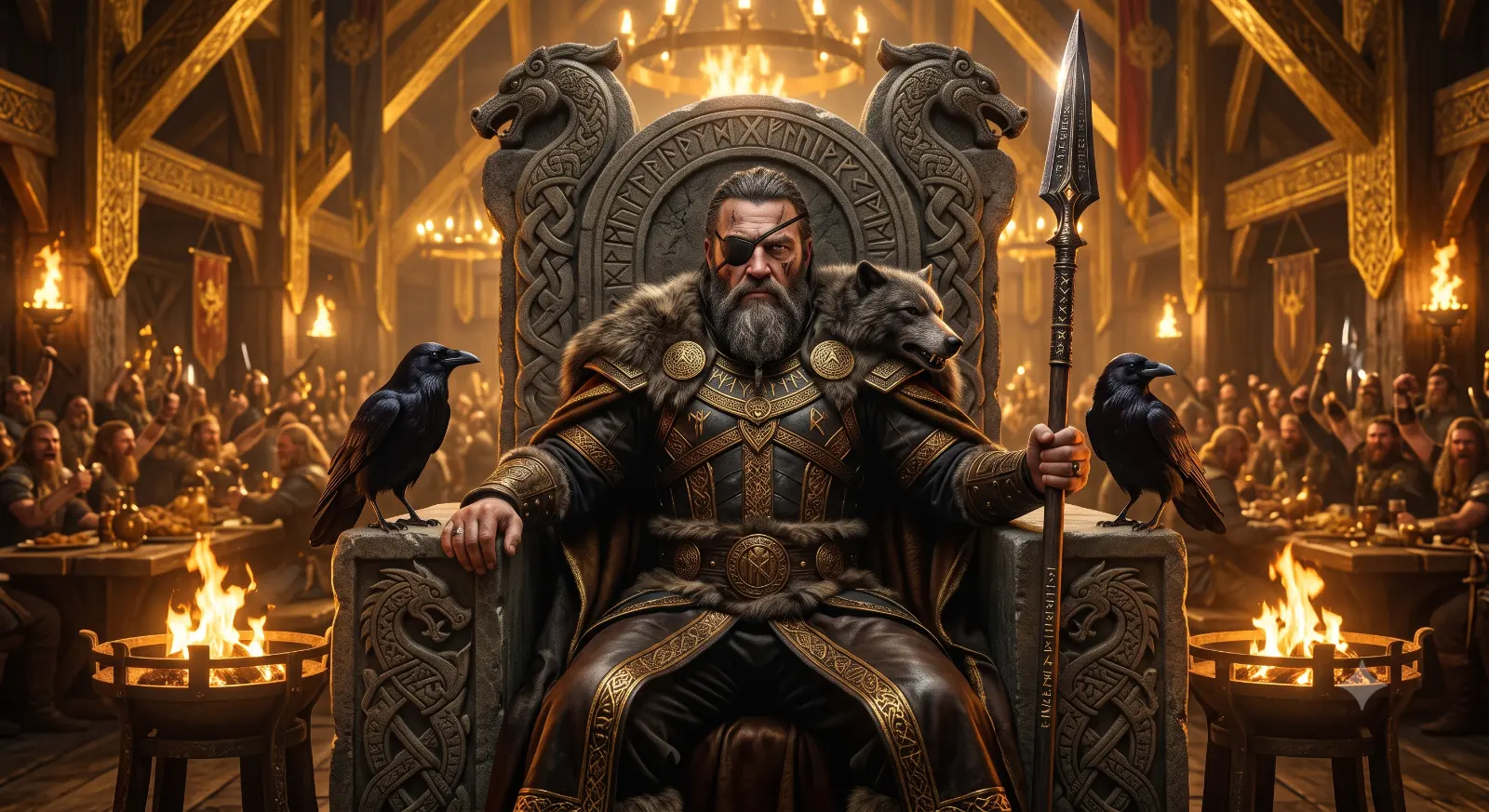
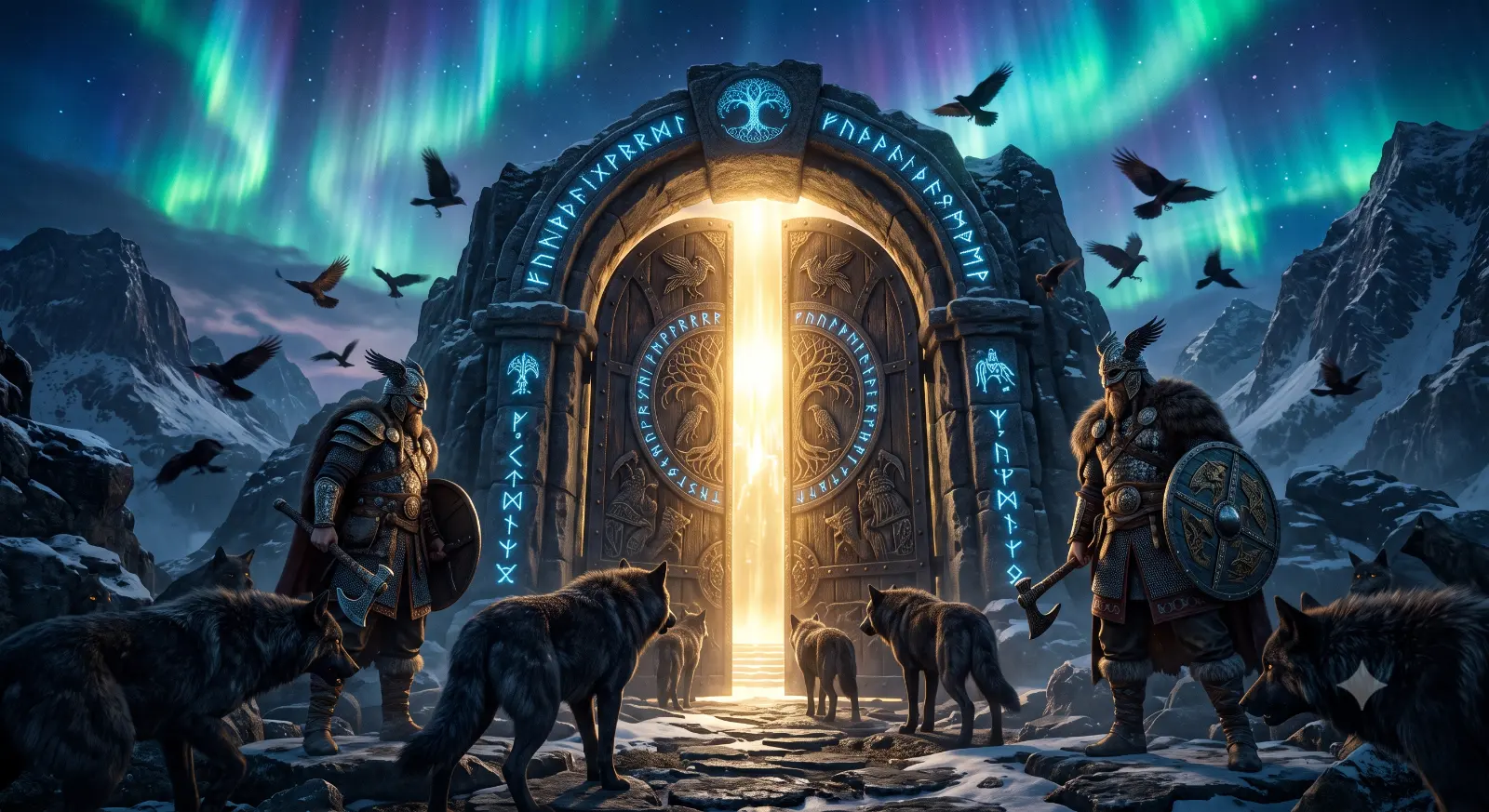
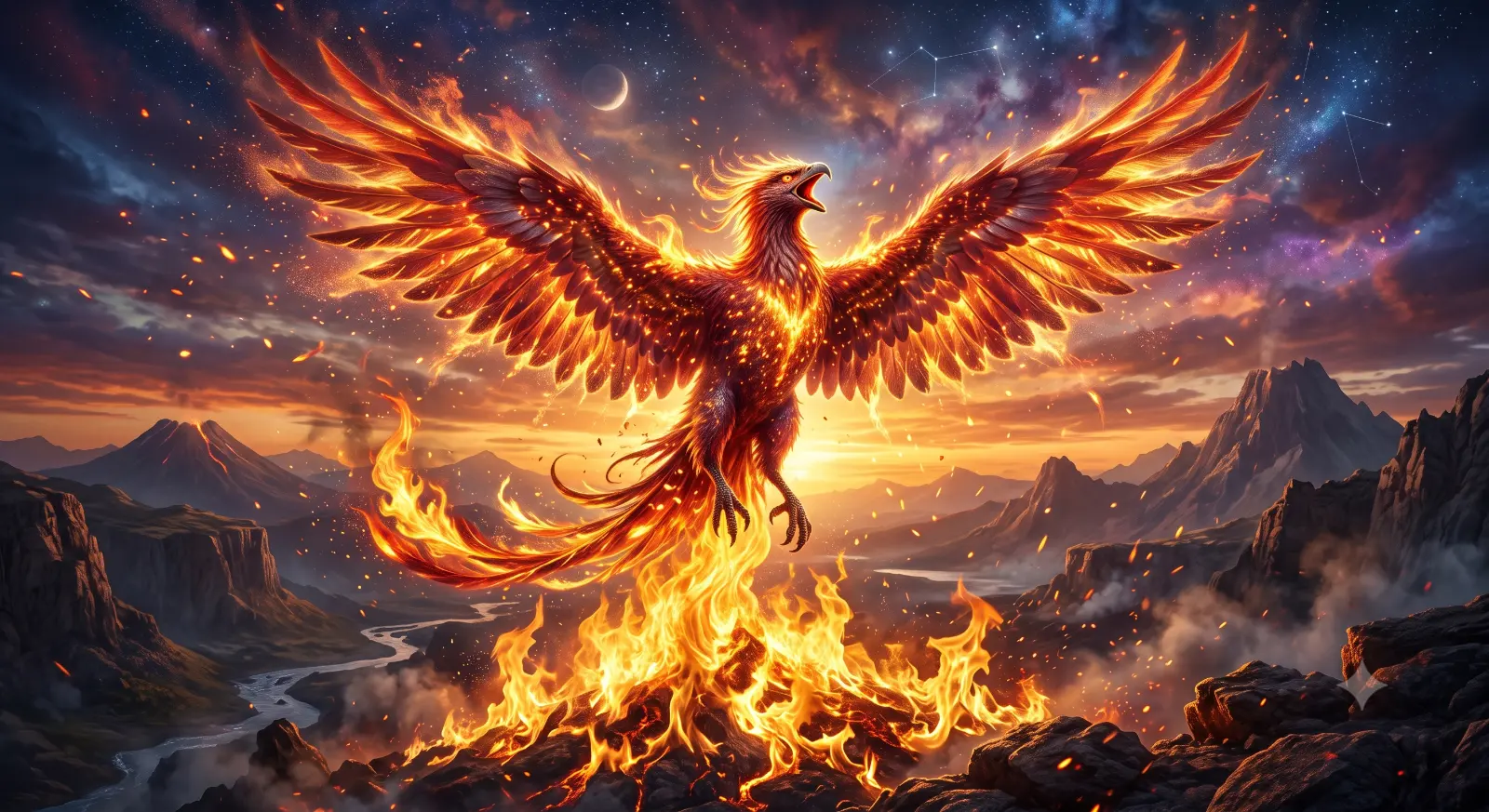
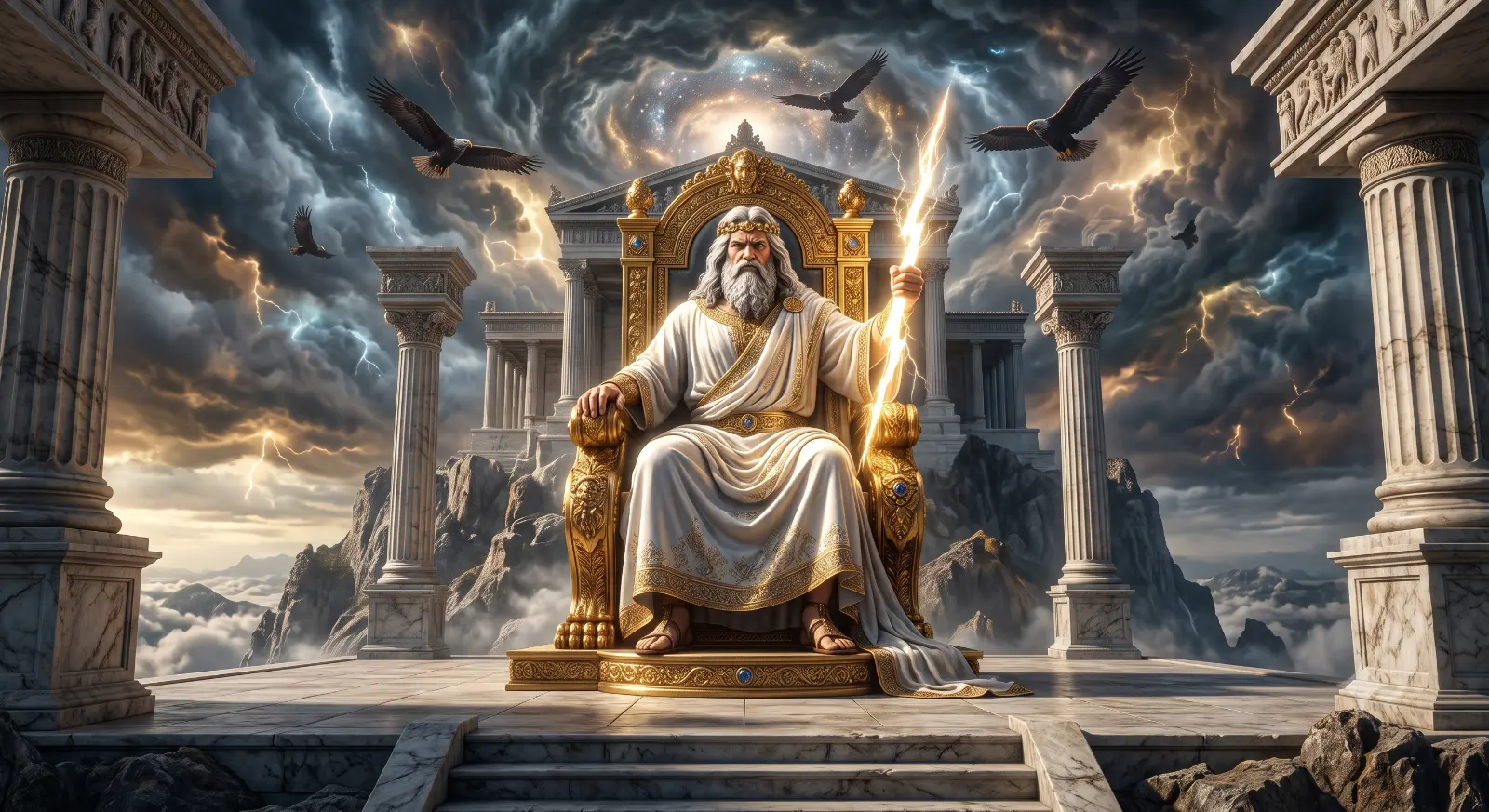
Mythology prompts draw from multiple traditions: the Norse pantheon (Odin enthroned in Valhalla with ravens circling, the Bifrost bridge arching to golden gates), Greek mythology (Zeus commanding storm lightning over Olympus, Poseidon rising from the ocean with trident), Egyptian iconography (Anubis standing guard at a temple entrance with torch-lit hieroglyphics behind), and the phoenix archetype (rising from golden fire in dramatic updraft). The prompts capture the epic register that mythology requires.
Mythological imagery relies on architectural grandeur, divine light, and symbolic object specificity. Scale is fundamental—gods should dwarf their surroundings or at minimum command them through pose and implied power. Divine light sources (celestial rays breaking through cloud banks, bioluminescent aura emanating from the deity's form, golden nimbus) are genre conventions that instantly signal godhood. Symbolic objects need material precision: "Odin's spear Gungnir with runic engravings along the ash shaft", "the golden scales of Anubis with precise balance pans holding a feather and a heart".
Adapt mythology prompts by choosing the cultural tradition first and matching the visual aesthetic—Greek mythology favours marble architecture and azure skies, Norse mythology favours dark stone, icy landscapes, and torchlight, Egyptian mythology favours golden desert light and hieroglyphic stonework. AI models have broad training on the major pantheons; for less common traditions (Aztec, Yoruba, Hindu), use specific deity names and iconographic symbols rather than relying on the model's general knowledge.